I Need a Drone Roof Inspection in Tampa Bay - Here's What to Expect
If you're looking for a professional drone roof inspection in Tampa, Clearwater, St. Petersburg, or anywhere in the Tampa Bay area, whether you're a homeowner, roofer, adjuster, or property manager, here's the short version: a FAA Part 107 certified drone pilot captures high-resolution visual and thermal imagery of your entire roof in a single visit, delivering detailed photos, thermal analysis, and a professional report within 48 hours. Residential inspections start at $199 for visual-only and $399 for the full RGB + thermal package. Here's exactly how it works and what you're getting.
What Is a Drone Roof Inspection and How Does It Work?
A drone roof inspection uses a professional-grade drone equipped with both a standard high-resolution camera (RGB) and a radiometric thermal sensor to document and analyze your entire roof from above, without anyone climbing a ladder.
We use the DJI Matrice 4TD, which captures visual and thermal data simultaneously. A full residential inspection follows this workflow:
1. Pre-dawn or post-sunset arrival: We fly the thermal inspection first, when temperature differences across the roof’s surface are most pronounced. This is when temperature anomalies that may indicate moisture intrusion, insulation issues, or other concerns are most visible on thermal imaging.
2. Thermal scan + detail shots: We manually scan the entire roof using split-screen RGB and thermal views. When we identify a temperature anomaly, we isolate it in full-screen thermal, zoom tight, and capture a detailed shot with temperature data intact.
3. Sunrise RGB mission: Once the sun is up, we fly the visual inspection and capture detailed photos of physical damage, wear, debris, and overall roof condition.
4. Processing and reporting: Everything is processed and compiled into a professional report with detailed imagery, temperature readings, and clear written findings. Everything is delivered within 48 hours.
One visit. Two inspections. A complete picture no ladder inspection can match.
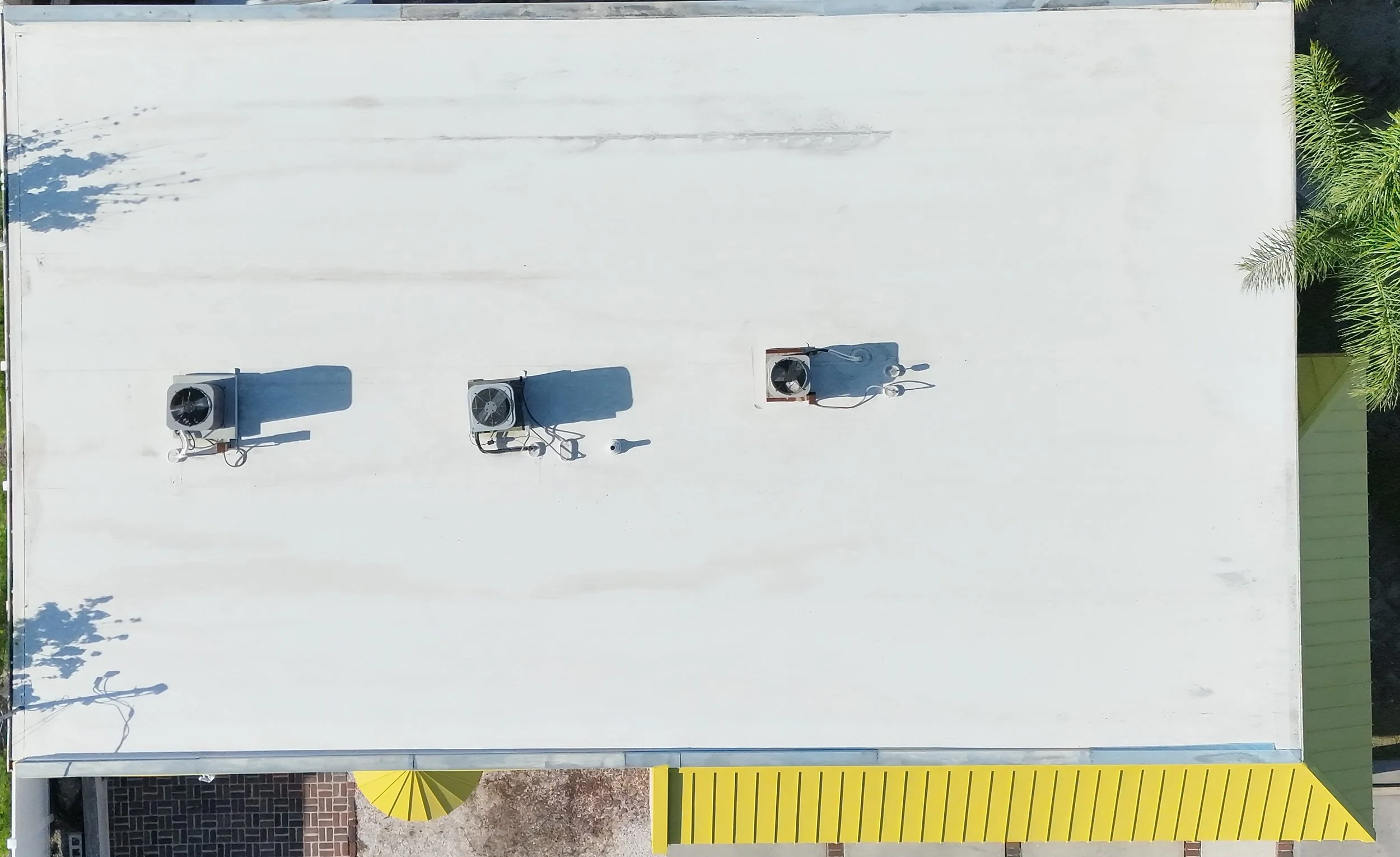
High-resolution aerial view captured during a professional drone roof inspection.
What Can a Thermal Drone Inspection Detect That a Regular Inspection Can't?
A standard visual inspection, whether from a ladder or a regular drone, only shows surface-level damage: missing shingles, cracked tiles, visible wear. Thermal imaging reveals temperature patterns beneath the surface that a visual inspection simply can't detect.
Potential Moisture Intrusion: The most common finding. Areas where moisture may be trapped beneath membranes, under tiles, or in the decking show up as distinct temperature anomalies, warmer or cooler than the surrounding material. These patterns are consistent with moisture retention and warrant further investigation by a roofing professional.
Possible Active Leaks: Thermal can identify temperature patterns consistent with water entry points, even when an interior ceiling stain is ten feet away from the suspected breach. Water travels along decking and structural members before it drips, thermal helps narrow down where to look, not just where the symptoms show up.
Insulation Anomalies: Unusual hot spots on a roof’s surface may indicate missing, compressed, or damaged insulation. These temperature irregularities point to areas that could be driving higher energy costs and accelerated wear on the roofing material above.
Suspected Ponding Areas: Flat and low-slope commercial roofs are especially prone to standing water. Thermal can reveal temperature patterns consistent with water retention even after partial evaporation, helping identify potential drainage issues before they lead to membrane failure.
Flashing & Penetration Concerns: Every pipe, vent, skylight, and HVAC unit that penetrates the roof is a potential failure point. Thermal imaging can highlight temperature irregularities around these penetrations that may indicate compromised flashing or sealant.
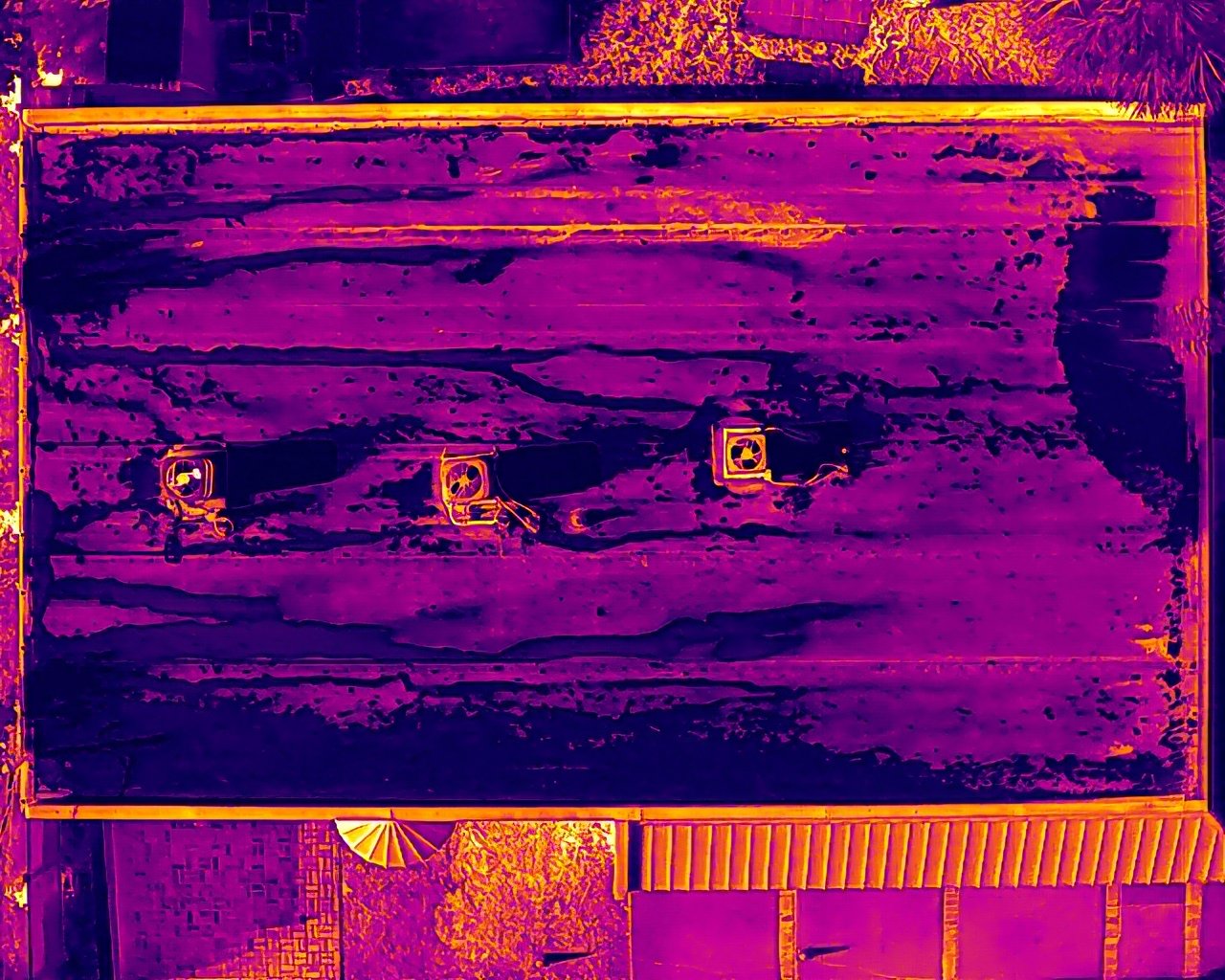
Thermal imaging captures temperature differences across the roof surface that are invisible to the naked eye.
How Much Does a Drone Roof Inspection Cost in Tampa Bay?
Pricing depends on the service level you need and the size of the roof. Whether your property is in Tampa, Clearwater, St. Petersburg, Brandon, or anywhere in the Tampa Bay area, here's what residential inspections (up to 2,500 sq ft) cost:
Residential Roof Inspection:
Basic RGB (photos + report): $199 | 5+ roofs: $159
RGB + Thermal (thermal analysis + stills + report): $399 | 5+ roofs: $319
Over 2,500 sq ft: Custom quote
Commercial Roof Inspection (per sq ft with minimums):
Basic RGB: $0.08/sq ft (min $499)
RGB + Thermal: $0.14/sq ft (min $799)
Multi-roof discount (5+): 10–20%
Why Does Thermal Experience Matter More Than the Drone?
Flying a thermal-equipped drone is one thing. Knowing what the thermal data actually means is another. Capturing thermal images requires technical skill, but interpreting temperature patterns, understanding what's normal versus what warrants concern, and delivering findings that professionals can act on takes real-world experience.
RARI Drones is owned and operated by a retired Firefighter and Paramedic with over 15 years of hands-on thermal imaging experience. In the fire service, thermal imaging isn't optional, it's a lifesaving tool. For over a decade and a half, I used thermal cameras to locate victims in zero-visibility conditions, detect fire behind walls and above ceilings, identify structural hot spots, and make real-time decisions where seconds mattered.
The same principles that allow a firefighter to read heat signatures through a burning structure apply directly to reading moisture patterns, insulation failures, and thermal anomalies on a roof. The sensor is the same. The physics are the same. The difference is 15 years of interpreting thermal data in life-or-death conditions versus learning it from a course.
When you get a thermal report from RARI Drones, the analysis comes from someone who spent 15+ years reading thermal images when it mattered most. That experience can't be bought in a weekend.
What Will My Inspection Report Include?
Every RARI Drones inspection report includes:
RGB photos with detailed notes: High-resolution images with written descriptions identifying physical damage, wear, debris, and areas of concern.
Thermal images with temperature data: Thermal captures taken during optimal conditions (pre-dawn or post-sunset) showing temperature anomalies across the roof surface, with temperature readings intact for analysis.
Clear written findings: No jargon, no guesswork. Plain-language descriptions of what we observed and what the thermal data may indicate, so you and your roofing professional know exactly where to focus.
Reports are delivered within 48 hours of the inspection. Digital files are shared via cloud link, which can be opened on any device. Share with your roofer, adjuster, or insurance company with ease.
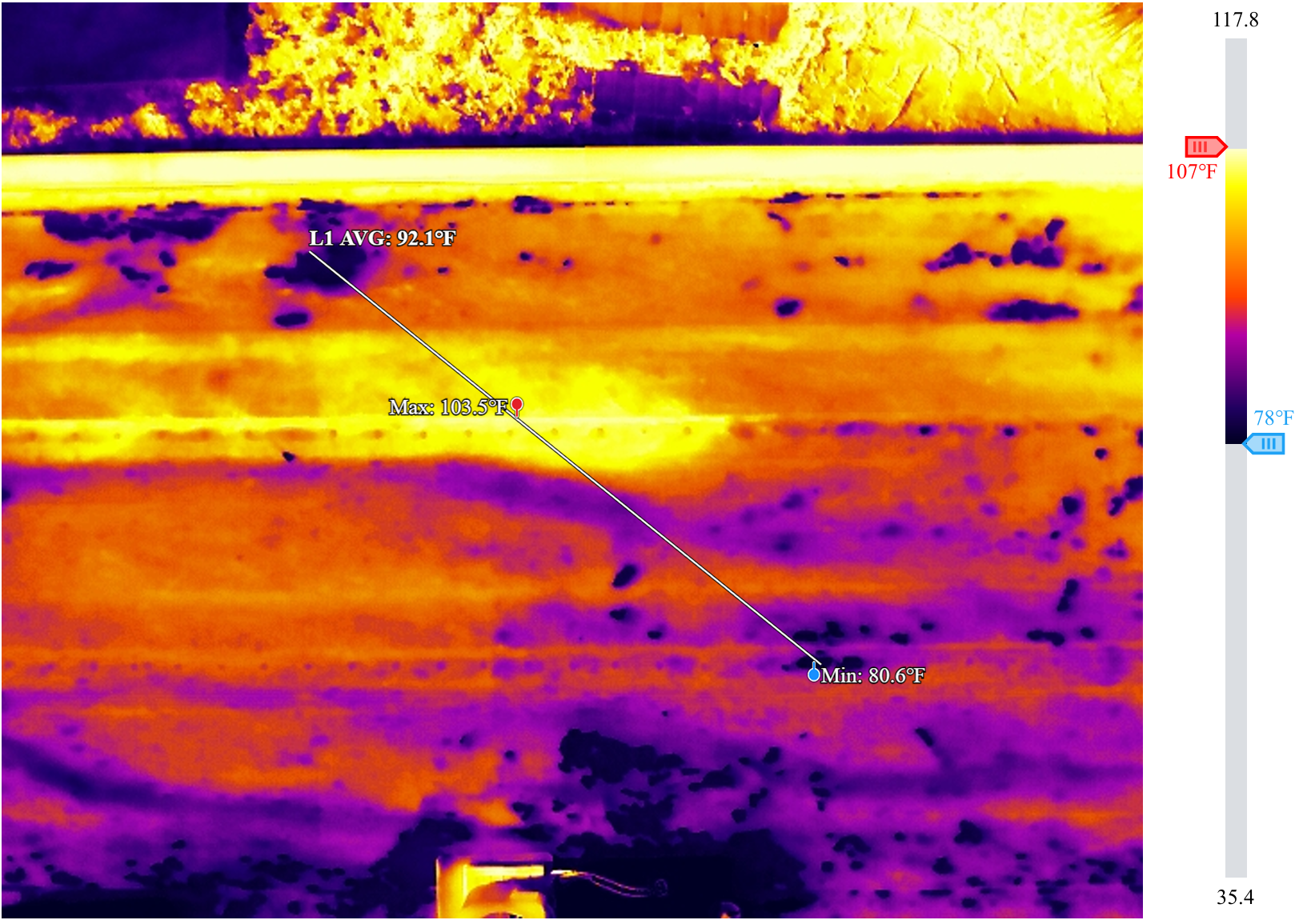
Thermal analysis with temperature readings highlights areas of concern for further investigation by a roofing professional.
When Is the Best Time to Get a Roof Inspection?
There's no bad time, but certain situations make a drone inspection especially valuable:
After a storm: Tampa Bay gets hit hard during hurricane season. High winds, hail, and flying debris cause damage that isn't always visible from the ground. Whether you're in Clearwater, Tampa, St. Petersburg, or Wesley Chapel, thermal imaging catches possible moisture that got in through storm damage before it has time to spread.
Before buying or selling a home: A drone inspection gives buyers confidence in the roof's condition and gives sellers documentation to back up their asking price. Thermal data can catch hidden problems that a standard home inspection misses.
Approaching the 15-year insurance mark: In Florida, insurers can require a roof inspection once your roof passes 15 years. If a licensed inspector certifies 5+ years of remaining useful life, you're protected. A thermal inspection gives you the data to back that up.
Before hurricane season: Catching small issues before June means fixing them while contractors are available, not competing with everyone else after a storm hits.
Annual maintenance checks: For commercial property owners and managers, annual thermal scans catch developing problems early, allowing targeted repairs instead of full replacement, which can save thousands.
How Is a Drone Roof Inspection Different from a Ladder Inspection?
Three major differences:
Safety: Nobody climbs your roof. No liability risk for you, no risk of damage to your roofing material from foot traffic. This is especially important for tile roofs, where walking on the surface can crack tiles and create the very damage you're trying to find.
Coverage: A person on a roof sees what's in front of them. A drone captures the entire roof surface systematically with every ridge, valley, edge, penetration, and transition. Nothing gets missed because nobody had to rush before the Florida heat got unbearable, whether it's a tile roof in Clearwater or a flat commercial roof in Tampa.
Data you can't get from a ladder: A thermal camera on a drone captures measurable temperature data across the entire roof surface. You can't get radiometric thermal data from a person with a phone camera on a ladder. And you certainly can't replicate the systematic, full-coverage thermal scan that reveals temperature anomalies across the entire roof’s surface.
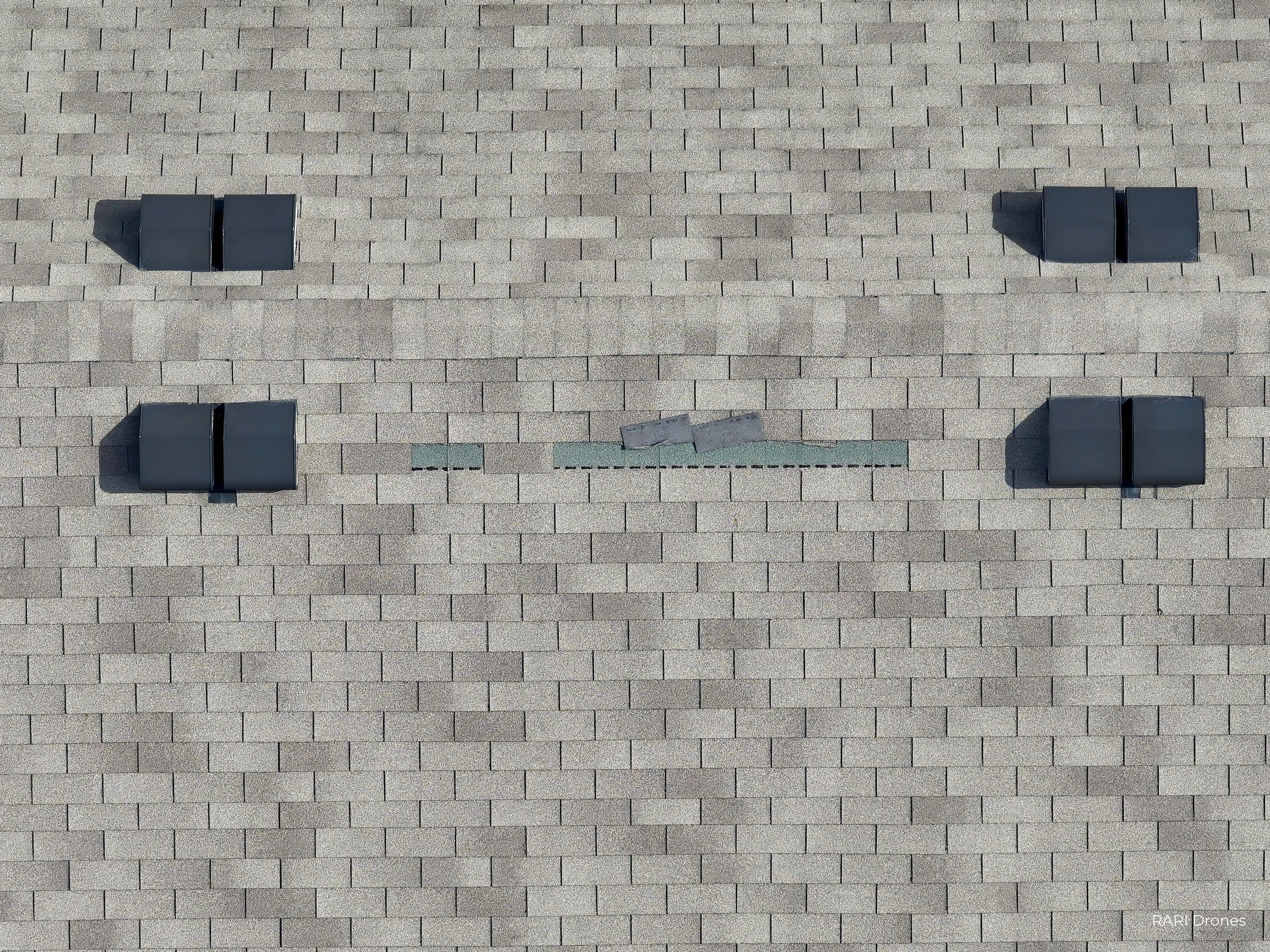
Drone-captured view of missing and damaged shingles. Damage like this is easy to spot from above but often missed from the ground.
Why Does This Matter for Florida Roofs Specifically?
Florida's climate is uniquely hard on roofs. Intense UV exposure, daily summer thunderstorms, hurricane-force winds, and year-round humidity create a relentless cycle of stress that accelerates deterioration.
A roof in Tampa, Clearwater, Spring Hill, or anywhere along the Gulf coast that looks fine from the ground could be holding trapped moisture from last week's afternoon storm. That moisture sits under the membrane in 90+ degree heat, creating the perfect environment for mold, rot, and structural decay. By the time it shows up as a water stain on your ceiling, the damage could have been spreading for months.
Thermal imaging catches these problems early, many times years before they become visible. In a state where roof condition directly impacts your insurance coverage and premiums, knowing the true condition of your roof isn't optional. It's essential.
What Areas Do You Cover?
RARI Drones serves residential and commercial properties across the entire Tampa Bay region:
Hillsborough County: Tampa, Brandon, Riverview, Plant City, Temple Terrace.
Pinellas County: Clearwater, St. Petersburg, Largo, Dunedin, Palm Harbor, Tarpon Springs, Seminole.
Pasco County: New Port Richey, Wesley Chapel, Trinity, Land O' Lakes, Zephyrhills, Dade City, Hudson.
Hernando County: Spring Hill and Brooksville.
Manatee County: Bradenton, Palmetto, Lakewood Ranch.
We're based in Pasco County and most properties are within 30 to 45 minutes. If your roof is in the Tampa Bay area, we can get there.
For urgent situations such as storm damage, insurance deadlines, or time-sensitive inspections, we offer a rush/emergency service with 24-hour response for an additional $250.
How Do I Schedule a Drone Roof Inspection?
Three steps:
1. Contact us for a free consultation. Tell us about your property including roof size, type, what you're concerned about, and whether you need visual only or the full thermal package.
2. We'll schedule your inspection at the optimal time for your needs. Thermal inspections require pre-dawn or post-sunset flights for the best data quality.
3. Report delivered within 48 hours. High-resolution photos, thermal images with temperature data, and clear written findings. Ready to share with your roofer, adjuster, or insurance company.
Ready to see what's really going on with your roof?